

Table of Contents
- What Scratch and Dent Actually Means
- Scratch and Dent vs. Open-Box Appliances
- How to Inspect Scratch and Dent Appliances
- Scratch and Dent Appliance Warranty Coverage
- The Real Cost Savings on Scratch and Dent Items
- Where to Find Scratch and Dent Appliances
- Common Mistakes to Avoid
- Frequently Asked Questions
Last Updated: September 20, 2026
What Scratch and Dent Actually Means
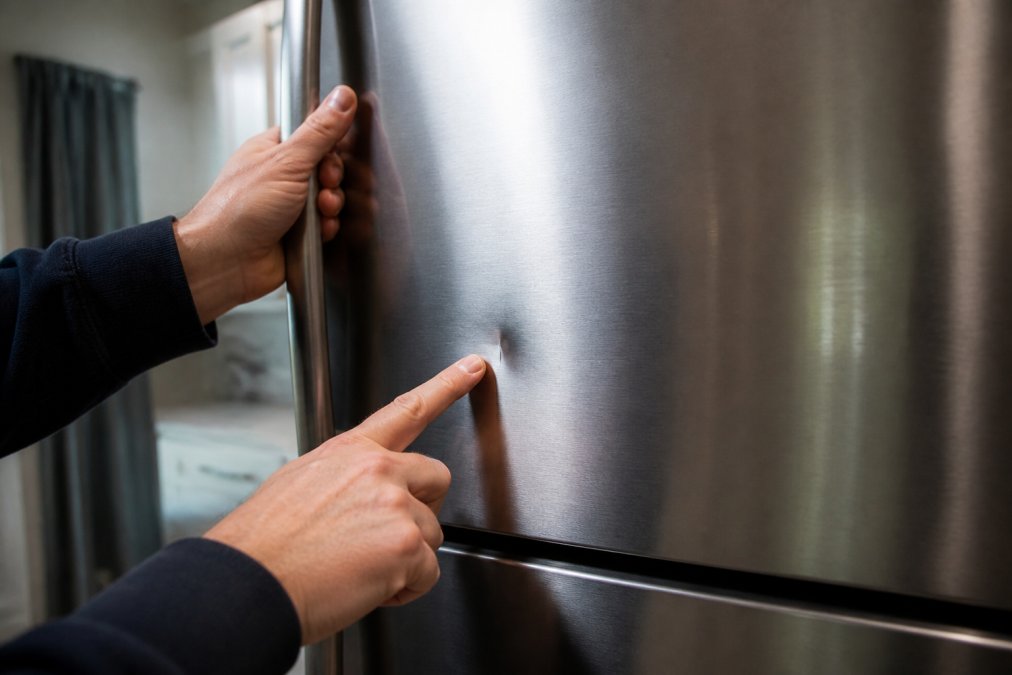
Scratch and dent refers to brand-name appliances and furniture with minor cosmetic damage that does not affect how the product works. The term describes items with surface-level imperfections like dents in the cabinet, scratches on the stainless steel, or scuffs on the frame. These products retain their original functionality and structural integrity despite their cosmetic flaws.
The cosmetic damage typically occurs during shipping, warehouse handling, or from customer returns.
How Cosmetic Damage Occurs
Shipping damage is a common source, as vibration and movement during transit can create small dents or surface scratches despite protective padding.
Warehouse handling via forklifts and pallet jacks can cause minor surface damage that doesn't compromise internal systems.
Customer returns also create scratch and dent inventory when opened boxes and minor cosmetic damage prevent resale as new.
Why Functionality Stays Intact
Scratches and dents affect appearance only; internal components like compressors, motors, and electrical systems remain untouched.
Appliances tested before leaving the factory continue to work as designed after cosmetic damage occurs; you pay less for the same performance.
Scratch and Dent vs. Open-Box Appliances
Understanding the differences between scratch and dent, open-box, and refurbished inventory helps you choose the right option for your needs. These categories overlap but carry different meanings and implications for warranty coverage and pricing.
Key Differences Between Categories
Scratch and dent items have cosmetic surface damage but have never been used; damage occurred during manufacturing, shipping, or warehouse handling.
Open-box appliances have been removed from packaging and opened by a customer but typically not used; they may have light cosmetic damage from unpacking.
Refurbished appliances have been professionally restored by the manufacturer with defective components replaced; they carry shorter warranties than new products.
Floor models are display units that have been inspected by customers but never installed or operated; they typically carry the manufacturer's original warranty.
Refurbished and Floor Model Inventory
When comparing these options, consider your priorities. If you want the lowest price and don't mind cosmetic imperfections, scratch and dent is your best choice. If you want assurance that the appliance has been professionally serviced, refurbished is worth the extra cost. If you want a display model with full warranty coverage, floor models often provide that security at a discount below retail.
How to Inspect Scratch and Dent Appliances
Inspect the appliance to confirm cosmetic damage is surface-level and the appliance operates correctly.
Visual Inspection Checklist
Examine the exterior for dents, scratches, and discoloration. Note that larger dents affecting door alignment or closure indicate a serious issue.
Check door seals and gaskets for cracks or tears, as damaged seals prevent temperature maintenance. Inspect hinges and hardware for bending or breakage.
Examine interior walls, shelves, and compartments. Verify shelves are seated properly, drawers slide smoothly, and ice maker and water dispenser mechanisms move freely.
Verify all buttons respond when pressed and displays light up and show readable text.
Document the cosmetic condition with photos to record the appliance's condition before delivery.
Testing for Original Functionality
Plug in the appliance and run it for 15-20 minutes. Listen for normal operational sounds and avoid unusual grinding, squealing, or rattling noises.
Verify temperature controls respond and the appliance reaches target temperature within 30 minutes.
Test ice maker and water dispenser for normal flow and pressure; note that ice makers may take 24 hours to produce ice.
For washers, dryers, or dishwashers, run a test cycle and verify normal operation sounds, water flow, and heating.
What to Watch Out For
Avoid appliances where dents affect door seals, scratches expose bare metal, or hinges are bent or broken.
Avoid appliances with water damage, staining, or rust spots indicating exposure beyond normal warehouse storage.
LG 26 Cu.Ft. Refrigerator/Freezer →
Avoid appliances with cracked control panels, non-functional displays, non-responsive buttons, or visible refrigerant leaks.
Verify all original components are present, as missing parts may be unavailable or expensive to replace.
Scratch and Dent Appliance Warranty Coverage
Understanding warranty coverage is crucial when purchasing scratch and dent inventory. Most retailers, including Dent & Deals, provide warranty protection on these discounted appliances.
What the 1-Year Warranty Includes
A standard 1-year warranty covers defects in materials and workmanship for internal mechanical and electrical systems, not cosmetic damage.
The warranty covers major components like compressors and motors during normal use but excludes damage from improper installation, misuse, or accidents.
Dent & Deals provides a 1-year appliance warranty on scratch and dent purchases, with extended warranty options available at time of sale.
Cosmetic Damage and Warranty Claims
The warranty does not cover cosmetic damage; it protects against functional failures only.
If a functional problem develops during the warranty period, the warranty covers repair regardless of cosmetic damage.
Document the appliance's condition with photos and keep warranty documentation and proof of purchase. Contact the retailer immediately if a functional issue develops.
The Real Cost Savings on Scratch and Dent Items
The primary advantage of scratch and dent inventory is the significant price reduction compared to full retail cost. Understanding the actual savings and weighing the pros and cons helps you determine if this option aligns with your needs.
Typical Discounts and Depreciation
Scratch and dent appliances typically sell for 30-70% below the manufacturer's suggested retail price. An LG refrigerator that retails for $1,549.99 might be available as a scratch and dent unit for $799.00. A Midea refrigerator originally priced at $1,399.99 could be discounted to $899.00. These savings represent genuine value for appliances that function identically to full-price models.

The discount percentage depends on the severity of the cosmetic damage and the original retail price. Minor cosmetic flaws on high-end appliances generate larger absolute savings. A small scratch on a $2,000 appliance might result in a $400-600 discount. The same minor damage on a $1,200 appliance might result in a $200-300 discount.
Dent & Deals offers these discounted prices on scratch and dent inventory, making it possible to furnish your home or replace essential appliances at a fraction of retail cost. The savings become even more significant when you're furnishing multiple rooms or replacing several appliances at once.
Pros and Cons of Buying Discounted
The primary advantage is cost savings. You pay substantially less for an appliance that performs exactly like a full-price model. This makes it possible to afford higher-end brands or larger capacity appliances than you might otherwise purchase. A family on a tight budget can upgrade to a 27-cubic-foot refrigerator for the price of a standard 17-cubic-foot model.
The second advantage is that you're not paying for the cosmetic perfection you don't need. If the appliance will be installed in a garage, basement, or rental property, the cosmetic condition is irrelevant. You get full functionality at a deeply discounted price.
The disadvantages center on aesthetics and resale value. If you're furnishing a visible kitchen or dining area where appearance matters, a dented appliance might not match your design vision. The cosmetic damage is permanent and won't improve over time.
Resale value is another consideration. If you eventually sell your home, a scratch and dent appliance won't command the same resale price as a pristine model. However, many buyers prioritize function over appearance, especially for older homes where appliances are already showing age.
Where to Find Scratch and Dent Appliances
Locating scratch and dent inventory requires knowing where retailers stock these items and understanding availability.
Retail Inventory Clearance Sections
Many appliance retailers maintain clearance sections where scratch and dent inventory is displayed. These items are often grouped together in a dedicated area, making it easy to browse options. Some retailers display scratch and dent items on the showroom floor alongside full-price merchandise. Others keep clearance inventory in a separate warehouse or storage area.
Local Availability and Delivery
Availability varies based on what inventory is currently in stock. Popular items and common sizes sell quickly. If you have a specific appliance in mind, contacting the retailer directly to confirm availability is important. Dent & Deals maintains current inventory and can tell you immediately whether a specific model is available.
Common Mistakes to Avoid
Making informed purchasing decisions requires awareness of common pitfalls. Avoiding these mistakes protects your investment and ensures satisfaction with your purchase.
Frequently Asked Questions
Is scratch and dent worth it for major appliances?
Yes, if the cosmetic damage doesn't bother you. Scratch and dent appliances typically cost 30-70% less than full retail while maintaining original functionality and performance. A refrigerator with a dented handle works exactly the same as a pristine one. The key is verifying the item functions properly before purchase and understanding your warranty coverage. Many buyers find the savings justify accepting minor cosmetic imperfections.
What is the difference between scratch and dent and open-box appliances?
Scratch and dent items have cosmetic surface damage from shipping or warehouse handling but were never used. Open-box appliances were purchased, opened, and returned unused or barely used by a customer. Open-box items may show signs of packaging removal but often have less visible damage. Both are functional and discounted, but open-box typically carries higher depreciation. Inspect actual photos or the unit in person to understand the specific condition.
Do scratch and dent appliances come with a manufacturer's warranty?
Scratch and dent appliances sold through retailers like Dent & Deals include a 1-year warranty covering mechanical and electrical failures, not cosmetic damage. The warranty protects you if the appliance stops working within that year. Extended warranty options (2, 3, or 4 years) are often available for an additional cost. Always confirm warranty terms before purchase, cosmetic dents and scratches are not covered, but structural integrity and performance are.
How do I know if a scratch and dent appliance is actually broken inside?
All scratch and dent appliances should be tested before sale to confirm original functionality. Request a demonstration or ask the retailer to power it on and test key features. For refrigerators, verify cooling cycles and ice makers work. For washers or dryers, run a test cycle. Ask for actual-unit photos showing both cosmetic damage and the interior. Reputable retailers test units and stand behind their 1-year warranty, so if something fails within that period, you're protected.